Why Poor Sleep May Be Quietly Undermining Your Finasteride Treatment
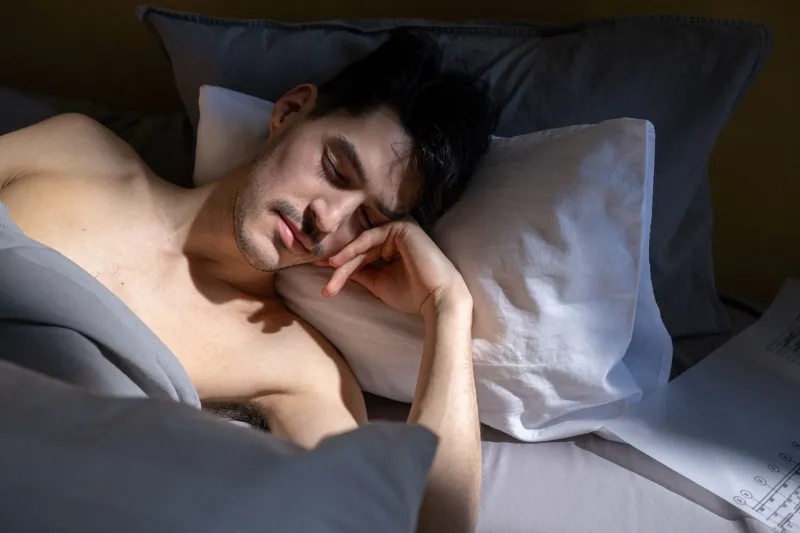
When men begin finasteride therapy for androgenetic alopecia, the checklist of considerations is usually straightforward: take the medication consistently, be patient with the timeline, watch for side effects, and perhaps adjust diet or supplementation. Sleep, by contrast, rarely earns a mention. Yet a growing body of research in sleep medicine, endocrinology, and dermatology suggests that what happens during the seven or eight hours you spend unconscious each night may have a meaningful effect on how well finasteride actually works.
This is not a peripheral concern. The hormonal systems finasteride is designed to modulate—particularly the conversion of testosterone to dihydrotestosterone (DHT)—do not operate in isolation from the rest of the body's biochemistry. They are embedded in a broader physiological network that is profoundly shaped by sleep quality, sleep duration, and circadian rhythm integrity.
How Finasteride Works and Why Hormonal Context Matters
Finasteride inhibits 5-alpha reductase, the enzyme responsible for converting testosterone into DHT. Because DHT is the primary androgen implicated in follicular miniaturization in genetically susceptible men, reducing its concentration at the scalp level slows or halts the progressive shrinkage of hair follicles that defines male pattern baldness.
The drug performs this function reliably under stable hormonal conditions. But the human endocrine system is not static. Hormone levels fluctuate across a 24-hour cycle, respond to stress, nutrition, physical activity, and—critically—sleep architecture. When those fluctuating conditions are chronically dysregulated, the baseline environment in which finasteride operates changes in ways that can blunt its effectiveness.
The Circadian Rhythm and DHT Production
Testosterone secretion in men follows a well-documented circadian pattern. Levels peak in the early morning hours, typically between 6:00 and 8:00 a.m., and decline gradually through the afternoon and evening. This rhythm is anchored to the sleep-wake cycle, and its integrity depends on consistent, restorative sleep.
When sleep is fragmented, shortened, or chronically misaligned—as is common among shift workers, men with untreated sleep apnea, or those with irregular schedules—testosterone secretion patterns become dysregulated. Research published in the Journal of the American Medical Association demonstrated that one week of sleep restriction to five hours per night reduced daytime testosterone levels in young men by 10 to 15 percent.
The downstream implications for DHT are consequential. Because DHT is synthesized from testosterone via 5-alpha reductase activity, disruptions to the testosterone rhythm create a more variable substrate for that enzymatic process. Finasteride reduces 5-alpha reductase activity, but it does not eliminate it entirely. In an environment where testosterone levels are erratic due to poor sleep, the residual enzyme activity may produce more variable DHT concentrations than would occur under stable hormonal conditions.
Cortisol, Inflammation, and the Follicle Environment
Sleep deprivation is one of the most reliable triggers of elevated cortisol, the body's primary stress hormone. Under normal circumstances, cortisol follows its own circadian arc—rising sharply in the morning to promote wakefulness and declining through the evening to facilitate sleep onset. Chronic poor sleep disrupts this arc, leading to persistently elevated evening cortisol and a blunted morning peak.
Elevated cortisol has several implications for men on finasteride. First, cortisol is catabolic and immunosuppressive in excess, and it promotes systemic low-grade inflammation. Research in dermatology has identified inflammatory signaling around the dermal papilla as a contributing factor in follicular miniaturization—a process that finasteride is working to counteract. A chronically inflamed scalp environment may partially offset the anti-androgenic benefits the medication provides.
Second, cortisol and androgens share metabolic pathways and compete for enzymatic resources in the adrenal cortex. Sustained cortisol elevation can alter the balance of androgenic precursors in ways that are not yet fully characterized but are unlikely to be beneficial for men with genetic susceptibility to hair loss.
Hair Follicle Cycling and the Role of Deep Sleep
Hair follicles are not passive structures. They cycle through active growth phases (anagen), transitional phases (catagen), and resting phases (telogen) in a rhythm that is influenced by hormonal signals, nutritional status, and—according to emerging research—circadian clock genes expressed within the follicle itself.
Studies in chronobiology have identified clock gene expression in hair follicle stem cells, suggesting that follicles have an intrinsic sense of biological time. Disruption of the systemic circadian rhythm through poor sleep may interfere with the local clock signals that regulate follicle cycling. In the context of androgenetic alopecia, where the anagen phase is already being shortened by DHT-mediated miniaturization, any additional disruption to follicle cycling represents an additive burden that finasteride alone may not fully compensate for.
Slow-wave sleep—the deep, restorative stage that dominates the first half of the night—is when growth hormone secretion peaks. Growth hormone plays a supportive role in maintaining anagen duration and promoting follicle health. Men who consistently fail to achieve adequate slow-wave sleep, whether due to alcohol consumption before bed, sleep apnea, or chronic stress, may experience diminished growth hormone pulses that compound the follicular damage DHT produces.
Sleep Apnea: An Underdiagnosed Variable in Hair Loss Treatment
Obstructive sleep apnea (OSA) deserves specific attention in this context. OSA is estimated to affect roughly 26 percent of American men between the ages of 30 and 70, and a significant proportion remain undiagnosed. The condition fragments sleep architecture severely, suppresses slow-wave and REM sleep, elevates sympathetic nervous system activity overnight, and chronically elevates both cortisol and inflammatory markers.
For a man on finasteride who is not seeing the results he expected, undiagnosed OSA represents a plausible and treatable confounding variable. If daytime fatigue, loud snoring, or morning headaches are part of the picture, a sleep study may be a clinically relevant step—not only for general health, but potentially for optimizing the hormonal environment in which finasteride is working.
Practical Sleep Optimization for Men on Finasteride
The goal is not perfection but consistency. A few evidence-based practices translate directly to the hormonal concerns outlined above:
Anchor your sleep schedule. Going to bed and waking at consistent times—even on weekends—stabilizes the circadian testosterone rhythm. Irregular schedules are among the most common and correctable sources of circadian disruption.
Protect slow-wave sleep. Alcohol, even in moderate quantities, significantly suppresses slow-wave sleep. Limiting consumption, particularly in the three hours before bed, preserves the growth hormone secretion that supports follicle health.
Address sleep apnea if symptomatic. Men with suspected OSA should pursue evaluation. Effective CPAP therapy has been shown to restore testosterone levels and reduce inflammatory markers in men with moderate-to-severe apnea.
Manage evening light exposure. Blue-light exposure from screens in the hour before bed delays melatonin onset and shifts the circadian clock. Dimming screens or using blue-light filtering settings after 9:00 p.m. is a low-effort intervention with meaningful circadian benefits.
Prioritize duration. Seven to nine hours remains the evidence-based target for adult men. Habitual restriction below seven hours is associated with the testosterone suppression and cortisol elevation most relevant to this discussion.
The Takeaway
Finasteride addresses a specific enzymatic step in DHT biosynthesis with well-documented efficacy. But it operates within a broader hormonal and physiological context that sleep profoundly shapes. For men who are already committed to finasteride therapy and want to extract the most from their treatment, sleep quality is not a soft lifestyle recommendation—it is a clinically relevant variable that influences the very hormonal environment the medication is designed to regulate. Attending to it with the same seriousness applied to dosing and follow-up care is not an overreach. It is simply good science.