Restarting Finasteride After a Long Break: What the Evidence Says About Recovery and Regrowth
For many men, the decision to stop taking finasteride feels like a clean break—a resolution to side effect concerns, financial pressure, or simple fatigue with a daily medication regimen. But hair loss rarely respects that decision. Within months of discontinuation, the androgenetic alopecia process resumes, and for some men, the progression accelerates beyond where it stood before treatment began. That reality brings a significant number of patients back to the conversation they thought they had closed.
Restarting finasteride after a prolonged absence is more common than clinical literature has historically acknowledged. Understanding what happens during the gap—and what is realistically achievable when treatment resumes—is essential for any man weighing this option.
Why Men Stop in the First Place
Discontinuation rates for finasteride are higher than many prescribers openly discuss. A 2020 analysis published in the Journal of the American Academy of Dermatology found that roughly 40 percent of men who begin finasteride for androgenetic alopecia discontinue within the first two years. The reasons are varied but cluster around three primary drivers.
Side effect concerns—particularly sexual dysfunction—represent the most frequently cited reason, even when those symptoms are mild or transient. Cost and insurance gaps create a second pressure point, especially for men who lose access to employer-sponsored coverage or face rising out-of-pocket pharmacy costs. A third group simply stops out of complacency: hair loss stabilized, the daily pill felt unnecessary, and adherence quietly eroded.
Each of these pathways back to discontinuation creates a different clinical profile when the patient eventually returns.
What Happens to Hair During the Gap
Finasteride works by inhibiting the 5-alpha reductase enzyme, which converts testosterone into dihydrotestosterone (DHT). DHT is the primary driver of follicular miniaturization in men with genetic susceptibility to androgenetic alopecia. When finasteride is discontinued, DHT levels typically return to baseline within one to two weeks. From that point forward, follicles that had been preserved or partially recovered under treatment are once again exposed to androgenic stress.
Clinical studies consistently show that men who stop finasteride lose a substantial portion of their treatment-related gains within six to twelve months. In some cases, shedding accelerates beyond the pre-treatment baseline—a phenomenon sometimes described as "catch-up" hair loss, where follicles that were only marginally preserved by the medication fail rapidly once DHT suppression is removed.
The longer the gap, the more extensive the follicular damage is likely to be. This is not a reason to avoid restarting—it is a reason to restart with clear expectations.
Is Regrowth Still Possible After Years Off?
This is the question most returning patients ask first, and the honest clinical answer is: it depends on follicular viability. Finasteride cannot restore follicles that have permanently miniaturized and ceased producing terminal hairs. However, a meaningful proportion of follicles in the affected zones of the scalp exist in a partially compromised state—still capable of producing hair if DHT suppression is reestablished.
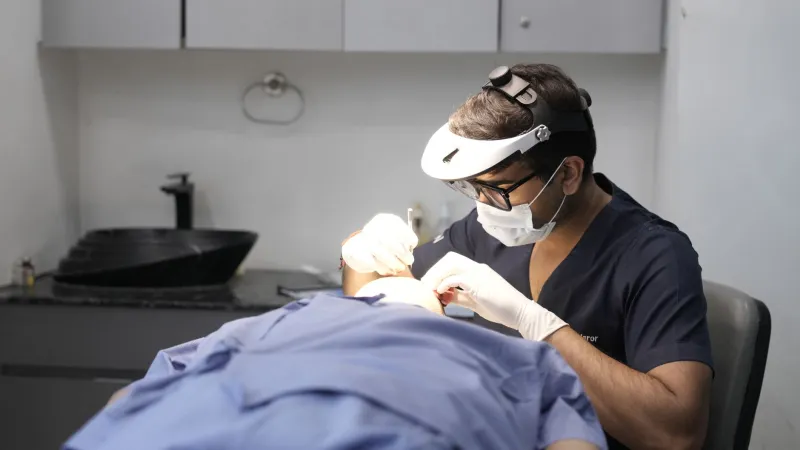
Dermatologists who specialize in hair restoration often use dermoscopy to assess follicular status before recommending a restart. This allows for a realistic conversation about which areas of the scalp are likely to respond and which have progressed beyond the point of pharmacological recovery.
In general, men who discontinued finasteride within the past two to three years tend to see more robust responses upon restarting than those who have been off the medication for five years or longer. That said, even patients with longer gaps frequently experience stabilization of further loss—a clinically meaningful outcome even when dramatic regrowth is not achievable.
How Dermatologists Are Approaching the Restart
One of the most significant shifts in clinical practice over the past several years involves how physicians manage the restart process, particularly for men whose original discontinuation was related to side effects.
For patients who stopped due to sexual side effects, many dermatologists are now exploring lower-dose initiation protocols. Rather than immediately returning to the standard 1 mg daily dose, some clinicians begin with 0.25 mg or 0.5 mg daily—doses that still meaningfully suppress DHT while reducing the pharmacological burden during the adjustment period. Gradual titration upward, if tolerated, allows the body to re-acclimate to the medication.
Alternatively, some prescribers are recommending an alternate-day dosing schedule during the first four to eight weeks of restarted treatment. While the evidence base for this approach remains limited, the pharmacokinetics of finasteride—which has a relatively long half-life and produces sustained DHT suppression even with intermittent dosing—provide a theoretical rationale for this strategy.
For men restarting due to cost concerns, the current generic finasteride market in the United States has made this barrier substantially lower than it was a decade ago. Monthly costs through major pharmacy chains and telehealth platforms now frequently fall below fifteen dollars, a threshold that removes the financial obstacle for most patients.
Combining Finasteride With Other Treatments on Restart
The restart moment is also an opportunity to reassess the broader treatment strategy. Many men who originally took finasteride as a monotherapy are now candidates for combination approaches that may accelerate or amplify results.
Minoxidil remains the most evidence-supported adjunct to finasteride, and its mechanisms are largely complementary—finasteride reduces DHT-mediated follicular damage while minoxidil promotes follicular cycling and blood flow to the scalp. A number of clinical trials have demonstrated superior outcomes for the combination versus either agent alone.
Low-level laser therapy (LLLT) devices, now widely available as FDA-cleared consumer products, represent another adjunct option that has grown in clinical acceptance. While LLLT's mechanism of action is not fully elucidated, its safety profile makes it a low-risk addition for patients seeking to maximize their response during a restart period.
Setting Realistic Expectations
Returning to finasteride is not a reset button. The hair loss that occurred during the gap cannot always be fully reversed, and the timeline for seeing results after a restart mirrors the original treatment timeline—most patients should not expect meaningful changes for at least three to six months, with more definitive outcomes emerging at the twelve-month mark.
What the research does support is this: for men who stopped finasteride and are experiencing renewed hair loss, restarting treatment is almost always preferable to continued inaction. The biological mechanisms that make finasteride effective do not fundamentally change with age or prior discontinuation. The window for meaningful intervention may narrow over time, but it rarely closes entirely.
For any man considering this step, a consultation with a board-certified dermatologist—rather than a self-managed restart—provides the best foundation for a strategy that accounts for current follicular status, previous side effect history, and realistic treatment goals.