Expectation as Side Effect: How Nocebo Effects Shape the Finasteride Experience
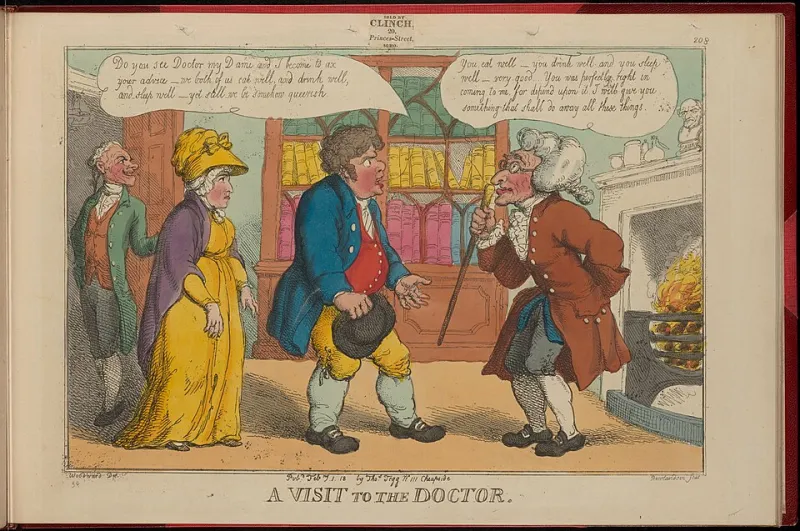
Photo: Unknown, CC BY 4.0, via Wikimedia Commons
Informed consent is a cornerstone of good medicine, and it occasionally produces the very symptoms it was meant to help patients anticipate. This is not a paradox unique to finasteride, but finasteride has become an unusually visible case study in it—a drug with a modest and well-characterized adverse event profile that has nonetheless acquired a reputation disproportionately shaped by expectation, narrative, and the architecture of online conversation.
The Evidence That Framing Changes Reporting
The most cited demonstration in this area came from a randomized study of men receiving finasteride for urinary symptoms. One group was counseled explicitly about the possibility of sexual adverse effects; the other was not. The group that had been warned reported sexual dysfunction at roughly three times the rate of the group that had not—despite receiving the same drug at the same dose. The symptoms were not fabricated. They were reported, experienced, and counted.
Placebo arms across finasteride trials tell a related story. In the large prostate cancer prevention trial of 5 mg finasteride, sexual adverse events were more frequent in the active arm than in the placebo arm for several endpoints—but the placebo arm itself generated substantial rates of the same complaints. In hair-loss trials at 1 mg, differences between finasteride and placebo on sexual endpoints have been small in absolute terms, on the order of one to two percentage points in many studies.
What Nocebo Actually Is
Nocebo refers to the production of symptoms by negative expectation. It is not imagination, malingering, or weakness. The mechanisms are physiological and increasingly well mapped: expectation alters attention to bodily sensation, shifts pain and symptom thresholds, and engages cholecystokinin and endogenous opioid systems. A man who expects reduced libido monitors his libido more closely, notices ordinary fluctuation he would previously have ignored, and attributes it to the pill. That process is involuntary and produces genuine distress.
Why Finasteride Is a Particularly Fertile Case
Several features converge. The drug is taken for a cosmetic indication, which changes the risk calculus—men are weighing sexual function against appearance, and the trade-off feels higher stakes. The adverse effects in question are subjective and continuous rather than binary; libido and erection quality vary naturally with sleep, stress, alcohol, relationship context, and age. There is no lab test that adjudicates the question. And the condition being treated is psychologically loaded in its own right.
Add to this the persistence of post-finasteride syndrome reports—a contested entity in which a minority of men describe enduring symptoms after discontinuation. The evidence base here is limited and methodologically difficult, dominated by self-selected survey data and case series. That does not make the reports false, and clinicians should not treat them as such. It does mean the phenomenon cannot currently be quantified, which makes it easy to overstate in either direction.
How Online Forums Distort the Picture
Discussion boards are built for the exceptional. Men whose treatment is uneventful have little reason to post; men whose experience was distressing have every reason. There is no denominator, no control group, and no follow-up. Threads accumulate, search engines surface them to men in the exact moment of anxious research, and the resulting impression is of a far higher risk than controlled trials demonstrate.
There is also an identity effect. Once a man has invested in a narrative—that this drug harmed him—that narrative organizes subsequent attention and interpretation. This is not dishonesty. It is how human beings make sense of ambiguous bodily experience.
Holding Two Truths at Once
Respecting the nocebo phenomenon does not require dismissing anyone. Genuine adverse effects occur; the trials show higher rates on active drug than placebo for some endpoints, and a clinician who waves away a patient's report as all in his head is practicing badly. The nocebo concept is not a rebuttal. It is an additional explanation that coexists with pharmacological ones and should be offered honestly rather than deployed defensively.
For Clinicians: Informing Without Seeding
- Lead with absolute numbers and the placebo comparator, not with adjectives.
- Frame sexual function as naturally variable before describing drug effects, so that ordinary fluctuation is not pre-loaded as a side effect.
- Avoid vivid anecdotal language in consent conversations; describe frequencies instead.
- Provide written material patients can consult later, rather than compressing risk information into a rushed visit.
- Schedule an early follow-up so that concerns surface in a clinical setting rather than a search engine.
- Use structured instruments such as the IIEF-5 or ASEX when symptoms are reported, to distinguish change from baseline variation.
- Take persistent post-discontinuation reports seriously and document them, even while acknowledging uncertainty about mechanism.
For Patients: Reading About Your Medication Without Frightening Yourself
Distinguish incidence from anecdote. A posted account is one person, not a rate. Note the baseline: sexual difficulties are common in the general male population at every age, with or without medication. Read systematic reviews rather than threads. Keep a simple symptom log if you are concerned, so you are comparing observations over time rather than impressions. Give the treatment a fair interval—hair outcomes take six to twelve months—and do not stop abruptly on the strength of a forum post without discussing it with your prescriber.
The Bottom Line
Expectation is not a trivial variable in finasteride treatment; it is one of the most powerful determinants of what patients report. Acknowledging that is not a way of discrediting anyone. It is a way of designing consent conversations, patient education, and self-directed research that leave room for both pharmacological reality and human psychology—and that let men make decisions on evidence rather than on the loudest story they encountered at 2 a.m.